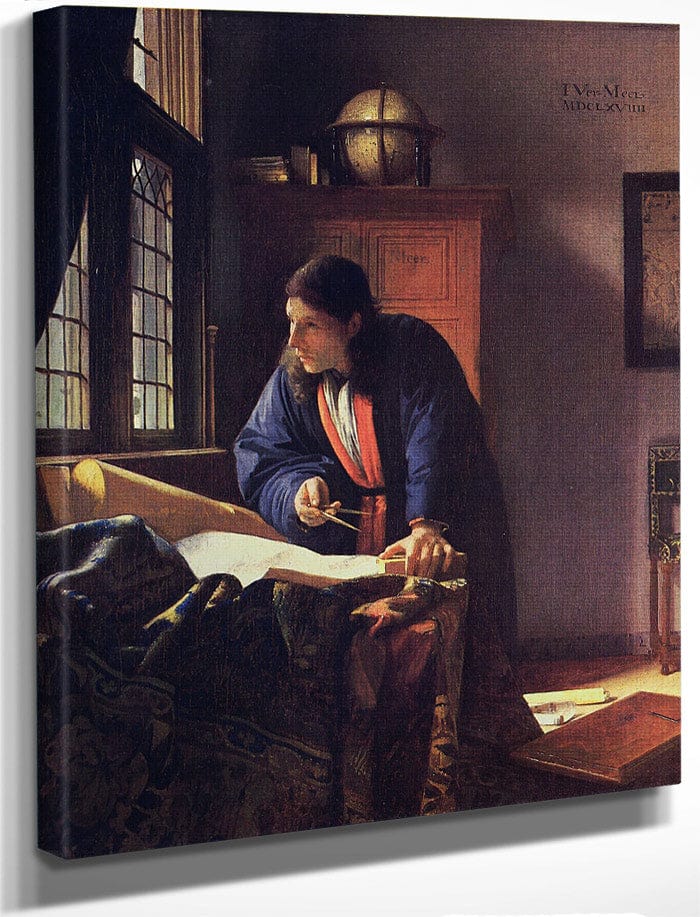


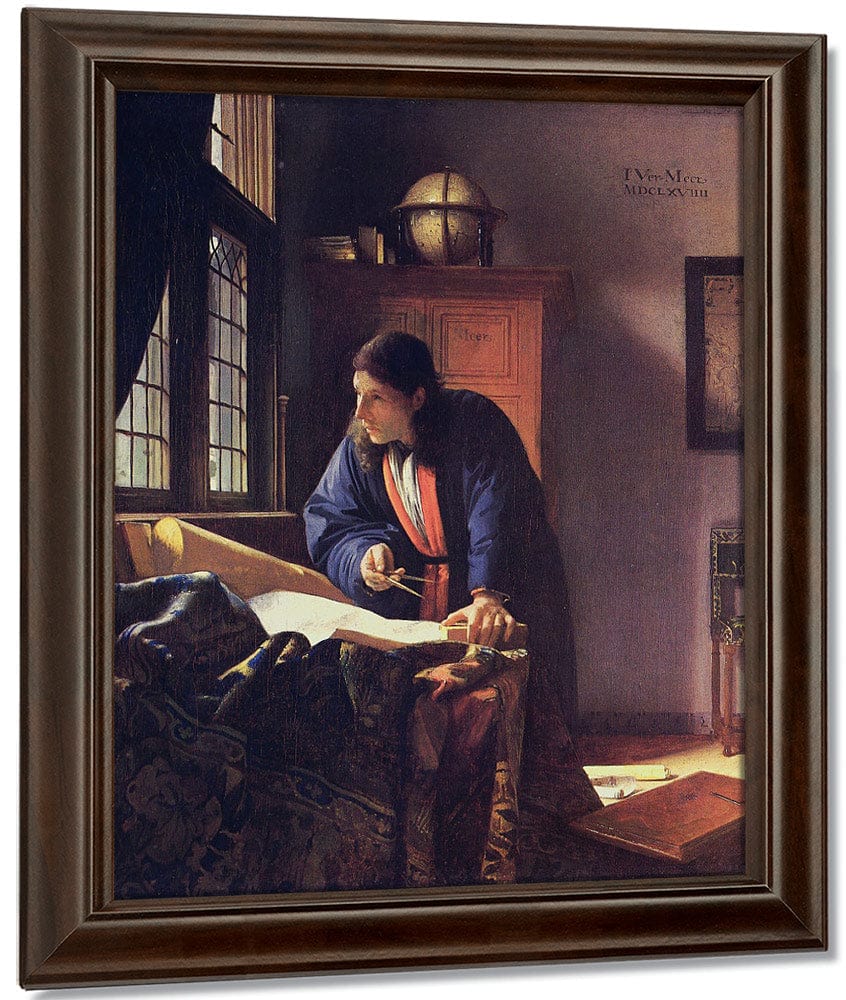



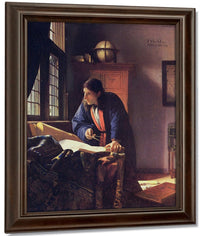


Johannes Vermeer
The Geographer 1669 By Johannes Vermeer
- Regular Price
- $165.43
- Sale Price
- $165.43
- Regular Price
- $330.87
- Unit Price
- per
Museum-Quality Giclée Prints
Our giclée prints are crafted using archival pigment inks that resist fading and faithfully preserve the original tonalities and hues of the artwork.
No Watermarks or Branding
Your print will arrive free of any watermarks or branding—just the art, exactly as intended.
Sizing & Framing Details
-
Unframed Matte Paper Prints: Delivered in the exact dimensions of the artwork on 280 gsm Artist Paper.
-
Stretched Canvas: Ready to hang with neatly finished edges and solid wood support.
-
Framed Prints: Professionally mounted in a premium wood frame with backing and wire installed.
Fast, Free Shipping
-
Free shipping in the USA and UK. Art Studio Based in USA - Washington.
-
UK orders include fast delivery with no customs fees.
Satisfaction Guaranteed
Enjoy peace of mind with our 30-day money-back guarantee. With over 15 years of experience in curating and reproducing fine art, we’re committed to exceptional craftsmanship and customer satisfaction.
Customer Reviews (Verified Buyers)
⭐️⭐️⭐️⭐️⭐️ "Love it! Arrived quickly."
⭐️⭐️⭐️⭐️⭐️ "Lovely painting and details are clear."
⭐️⭐️⭐️⭐️⭐️ "Great work on our Renoir."
⭐️⭐️⭐️⭐️⭐️ "Exceptional quality print."